

Do Dogs Like Being Brushed? A Calm Owner's Guide
Table of Contents
- Do Dogs Like Being Brushed? The Honest Answer
- Signs a Dog Enjoys Being Brushed (And Signs They Don't)
- Why Some Dogs Dislike Brushing
- How to Get a Dog Used to Being Brushed
- How Often to Brush a Dog
- The Best Brush for Dogs With Curly Coats
- What to Do When Brushing Goes Wrong
- Frequently Asked Questions
Last Updated: 18 October 2026
Do Dogs Like Being Brushed? The Honest Answer
Some dogs lean into the brush like it's the best part of their day. Others bolt the moment they see it. So do dogs like being brushed? The honest answer is: most can learn to, but almost none are born loving it. At Dexter And Billy Co, we hear from owners every week whose dogs either tolerate brushing or actively avoid it. The good news is that brushing is a skill you can teach, not a personality trait your dog either has or doesn't.
The real question isn't whether dogs like being brushed. It's whether your dog has been shown that the brush predicts good things. Below, we'll walk through the signs to watch for, why some dogs struggle, and the gentle steps that turn brushing from a battle into a calm routine.
Signs a Dog Enjoys Being Brushed (And Signs They Don't)
A relaxed dog shows you with their whole body. A stressed dog does too, but the signals are quieter and easier to miss.
Green Flags: Relaxed and Willing
Watch for a dog that settles into position and stays there. These are the signs a dog enjoys being brushed:
- Leaning into the brush or turning to offer a shoulder
- Soft, loose body posture with a gently wagging tail
- Slow blinking or heavy eyelids
- Staying put when you pause, rather than walking off
- Lying down or resting their head
Red Flags: Stress Signals to Watch For
A common mistake is reading stillness as calm. Some dogs freeze because they're uncomfortable, not because they're happy.
- Lip licking, yawning, or turning the head away
- Tucking the tail or flattening the ears
- Trying to mouth the brush or your hand
- Sudden scratching or shaking off mid-brush
- Stiffening when you touch a certain area
Why Some Dogs Dislike Brushing
Most brushing resistance comes down to three things: tangles pulling on sensitive skin, being handled in ways that feel unpredictable, or a bad early experience. A dog with a matted coat isn't being difficult. Brushing genuinely hurts when the brush snags on knots.
Puppies and rescue dogs often need extra time. A puppy is still learning that hands and tools are safe. A rescue dog may carry old associations you can't see. Breed matters too: curly, wavy, and tangle-prone coats need more careful handling because knots form close to the skin.
The fix isn't a firmer hand. It's slower, shorter sessions that never tip into discomfort.
How to Get a Dog Used to Being Brushed
Getting a dog used to brushing works best when you treat it as a training exercise, not a chore. Build the habit in small steps and let your dog set the pace.
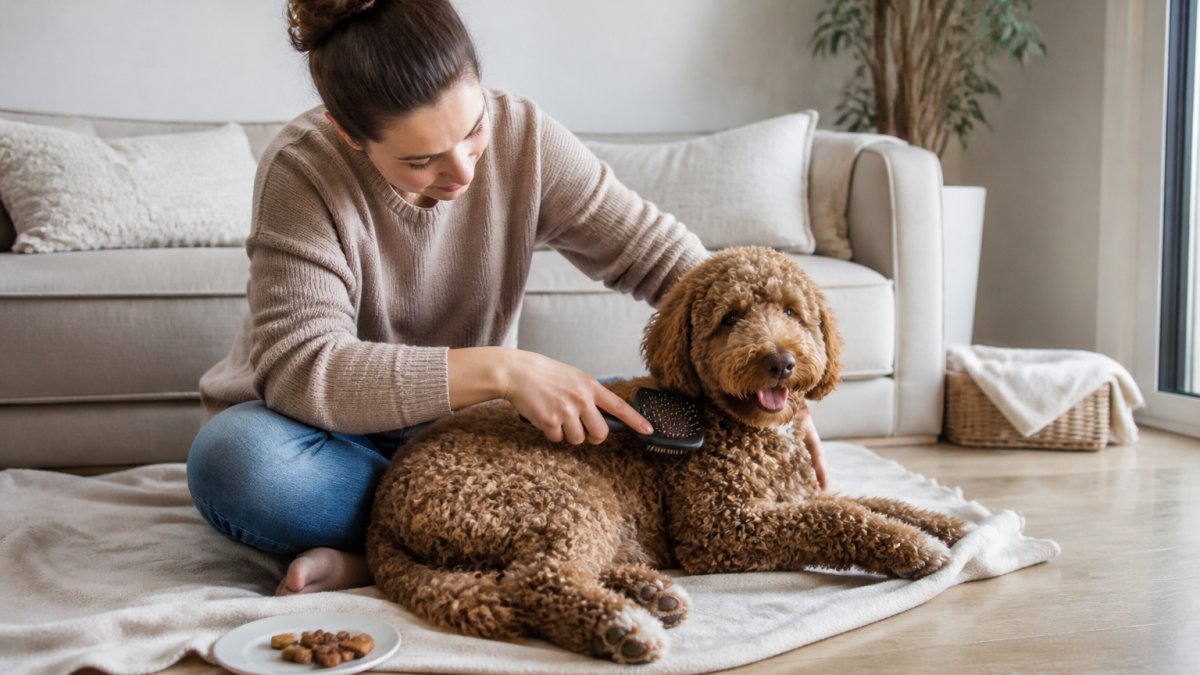
Start With Short, Positive Sessions
Begin with one or two minutes, not a full groom. Touch your dog with the back of the brush first, then a single gentle stroke. Stop before your dog wants to leave. A puppy still learning the ropes benefits from this approach, and our Gentle Puppy Grooming Confidence Guide lays out age-based steps for exactly this stage.

Pair the Brush With Good Things
Keep a handful of small treats nearby. Brush one section, then reward. If your dog gets wriggly, end the session and try again tomorrow. Over a week or two, most dogs start to connect the brush with something pleasant.
Finally feel confident grooming your dog at home. →
How Often to Brush a Dog
How often to brush a dog depends on coat type, not a single rule. Short, smooth coats usually need a quick brush once or twice a week. Double coats need more in shedding season. Curly, wavy, and tangle-prone coats need brushing every one to two days to stop knots forming close to the skin.
| Coat Type | Brushing Frequency | Watch For |
|---|---|---|
| Short and smooth | 1-2 times a week | Little matting risk |
| Double coat | 2-3 times a week, more in shedding season | Loose undercoat build-up |
| Long and silky | Daily or every other day | Tangles behind ears |
| Curly and fleece | Every 1-2 days | Matting near the skin |
The Calm Dog Grooming & Coat Care Guide helps you match a routine to your dog's specific coat, so you're not guessing.

The Best Brush for Dogs With Curly Coats
The best brush for dogs with curly coats is one that reaches through the coat without scraping the skin. Curly and fleece coats trap loose hair, so a slicker brush alone won't cut it. You need a tool that separates the coat gently.
- Slicker brush: good for the surface and for fluffing, but use light strokes
- Metal comb: the real mat-finder; run it after brushing to check for knots
- Silicone massage brush: gentle and calming, useful for bath days and nervous dogs
The Pride + Groom The Bath Brush is a soft silicone option that lathers, massages, and lifts loose fur in one go. It suits all coat types and works well for dogs who find firmer brushes too much.
What to Do When Brushing Goes Wrong
When brushing goes wrong, the fix is almost always to go smaller and slower. If your dog snaps, freezes, or fights the brush, stop and reset. Don't force a mat out, and don't hold your dog down. Both make the next session harder.
If you hit a solid mat, work at the edges with your fingers and a comb, not the brush. Severe matting that's been there for months is best handled by a professional groomer, and that's not a failure on your part. Our free Puppy Grooming Starter Guide is a gentle first step if you're starting from scratch with a young dog.

Frequently Asked Questions
Do dogs actually enjoy being brushed?
Many dogs do learn to enjoy brushing once they understand what it is and feel safe. Brushing removes loose fur, eases itching and feels a bit like a gentle massage for many dogs. The key is how it's introduced. A dog that is rushed, tugged at or brushed over tangles will usually dislike it, while a dog brushed in short, calm sessions with treats and praise often comes to see it as a pleasant part of the day.
How can I tell if my dog likes being brushed?
The clearest signs a dog enjoys being brushed include leaning into the brush, staying relaxed with soft eyes, nudging you for more and settling down rather than walking away. Some dogs will even flop onto their side. Watch for the opposite too: stiffening, lip licking, yawning, turning the head away or trying to leave are signals your dog is uncomfortable and needs a break or a gentler approach.
How often should I brush my dog?
It depends on the coat. Short, smooth coats usually need a quick brush once or twice a week. Double coats benefit from a few sessions a week, especially during shedding season. Curly, wavy and tangle-prone coats need brushing most days to stop knots forming close to the skin. Little and often always beats one long session, especially for dogs still learning to enjoy being brushed.
What should I do if my dog growls or tries to bite when brushed?
Stop immediately and don't force it. Growling is your dog telling you they're uncomfortable, not being naughty. Give them space, then try again later with a softer brush and much shorter sessions, pairing the brush with treats. If your dog is severely matted, don't try to brush out the knots at home, as this can hurt and make things worse. Ask a professional groomer for help and build calm handling habits from there.
Brushing a dog who'd rather be anywhere else can feel like a losing battle. It doesn't have to be. Our digital guides and printable workbooks give you calm, clear steps for every coat type, so you can build a routine that works for your dog. Get started with Dexter And Billy Co and turn brushing into a peaceful part of your day.