

Help Severely Matted Dogs at Home: A 2026 Guide
Table of Contents
- Understanding Why Your Dog's Coat Has Become Severely Matted
- Is Matted Fur Painful for Dogs?
- Tools and Products You'll Need for Safe Mat Removal
- Step-by-Step Guide to De-matting Your Severely Matted Dog at Home
- When to Take a Matted Dog to a Groomer or Vet
- How to Prevent Dog Hair Matting After Treatment
- Keeping Your Dog Calm During the De-matting Process
- Frequently Asked Questions
Last Updated: 21 October 2026
Understanding Why Your Dog's Coat Has Become Severely Matted
Understanding how matting happened makes the process of helping a severely matted dog at home clearer.
For curly, wavy or fleece-style coats (think Cockapoos, Cavapoos and Doodles), matting happens faster than you'd expect because of how the hair grows and curves. Even a week without proper brushing can create small knots that develop into larger, tighter and more painful mats.
Matted fur rarely appears overnight; it's usually a gradual process of missed grooming sessions and inconsistent routines.
Is Matted Fur Painful for Dogs?
Yes, matted fur is genuinely painful for dogs.
Severe matting also traps moisture and heat against the skin, letting bacteria and yeast thrive, which leads to irritation, infection and sometimes infected hot spots.
You might notice more scratching, irritability during grooming, or reluctance to move. Some dogs withdraw or snap during handling because the matting genuinely hurts; this isn't misbehaviour, it's pain communication.
Research from veterinary dermatology studies confirms that severe matting compromises skin health and causes measurable discomfort. This is why tackling matting promptly, and knowing when professional help is necessary, matters so much.
Tools and Products You'll Need for Safe Mat Removal
Before de-matting at home, gather the right tools. The wrong equipment can damage the coat, hurt the skin or triple the time it takes, but you don't need a huge investment, just a few quality items designed for mat removal.
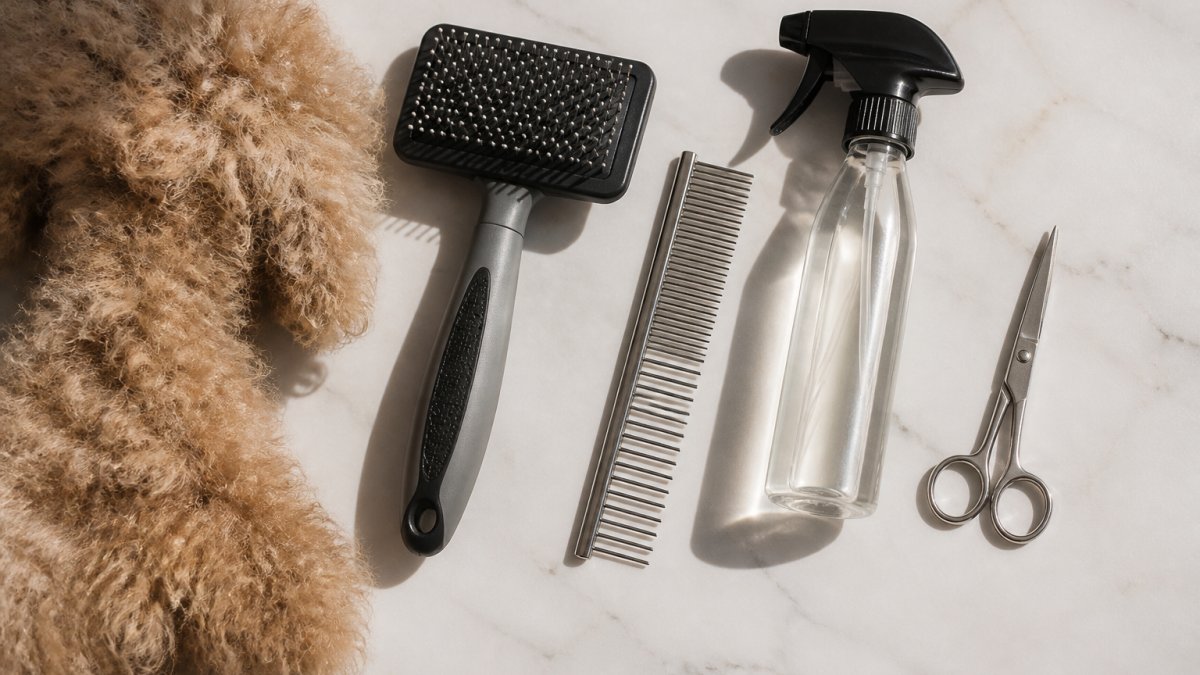
Choosing the Right Slicker Brush and Comb
A slicker brush is your primary tool for breaking up mats. Look for fine, short wires set close together so it catches tangles without skipping over them, and a handle that feels comfortable for extended use.
Pair it with a metal comb with fine and wider teeth: the fine teeth check for remaining small tangles, the wider teeth work through larger sections.
Quality matters: cheap brushes shed wires, have loose handles and make the job harder, so spending a bit more upfront saves frustration and time.
Detangling Sprays and Conditioning Products
A good detangling spray is essential for helping mats separate without breaking the hair. Look for products designed specifically for dogs with curly or tangle-prone coats.
Apply the spray generously to matted sections and let it sit for a few minutes to penetrate the mat and loosen the hair. DIY mixes of water, conditioner and oil exist, but commercial dog products are more effective and safer.
You'll also want a good conditioning shampoo for the bath stage. A hydrating, detangling shampoo helps prevent new mats from forming whilst you're washing.
Step-by-Step Guide to De-matting Your Severely Matted Dog at Home
De-matting a severely matted dog requires patience, the right technique and realistic expectations. Heavily matted coats can take several hours, so set aside dedicated time and break it into sessions.
Before You Start: Preparation and Safety Checks
First, assess the severity.
Prepare good lighting, a comfortable spot for your dog (a grooming table or towel on the floor) and all tools within reach, with treats nearby to reward calm behaviour. Let your dog have a toilet break and some water first.
Brush gently before bathing to remove loose tangles, working in small sections from the outer edges of mats inward.
The De-matting Process: Working Through Problem Areas
Apply detangling spray and wait a few minutes.
Once loosened, use your metal comb to check for remaining tangles; the fine-toothed side catches small knots you might have missed.
For very tight mats, you might need to use small grooming scissors to carefully cut into the mat (never at the skin, always cut away from the body).
Work in 15-20 minute sessions. Pushing past your dog's tolerance creates stress and resistance that makes future grooming harder, so three 20-minute sessions over three days beats one exhausting two-hour session.
Common Mistakes to Avoid During Mat Removal
The biggest mistake is brushing through mats from the skin outward, which pulls on the skin and causes pain.
Don't skip the detangling spray: brushing mats dry wastes time and damages the coat. Apply generously and let it work before brushing.
Avoid regular brushes and combs, which won't penetrate matted fur and can tighten mats. Invest in proper slicker brushes and metal combs designed for mat removal.
Finally feel confident grooming your dog at home. →
Never punish or scold a resistant or anxious dog; it creates negative grooming associations that persist long-term.
When to Take a Matted Dog to a Groomer or Vet
Sometimes a severely matted dog needs professional help, and recognising these limits keeps your dog safe.
Professional groomers have industrial-strength tools and experience with difficult cases, working efficiently and knowing when to refer to a vet. A vet should assess any matted coat causing skin issues, as infection may need treatment.
Also consider professional help if your dog is anxious or aggressive during grooming; a groomer can use calming techniques that make it safer and less stressful. Some dogs simply do better with professional handling, and that's okay, not a failure on your part.
How to Prevent Dog Hair Matting After Treatment
Once you've de-matted your dog, prevention is about building a realistic routine. Most everyday dog owners struggle with consistency, so aim for a routine you can actually maintain.
Building a Realistic Weekly Grooming Routine
Establish a schedule that fits your life. For tangle-prone coats, brushing 2-3 times per week is typically enough, though dogs that spend time outdoors or get wet regularly may need more.
Set a specific day and time, perhaps Sunday evening and Wednesday after work, to build a habit. Even 10-15 minutes is enough if you're consistent.
Use the same tools as before: a slicker brush for general brushing and a metal comb to check your work, so small tangles never develop into mats.
Bathing and Drying Techniques That Prevent Tangles
How you bathe and dry your dog matters as much as how often you brush.
During the bath, use a hydrating shampoo and rinse until the water runs clear, as residue causes tangles. Avoid scrubbing or creating friction that tangles the coat.
Drying is where most people go wrong. Never rub the coat with a towel, which creates friction and tangles; gently squeeze water out and blot instead.
Veterinary guidance on coat care emphasises that proper drying is one of the most important steps in preventing matting. Taking time here saves hours of de-matting later.
Keeping Your Dog Calm During the De-matting Process
A calm dog is easier to groom, and a positive experience builds confidence for future sessions. Create a relaxed environment: a quiet space, a calm voice and no rushing.

Offer high-value treats throughout, not just at the end, to create positive associations. Frozen treats or long-lasting chews keep many dogs occupied whilst you work.
For dogs that get snappy or aggressive, consider a trainer or behaviourist.
Helping a severely matted dog at home is absolutely possible when you have the right tools, realistic expectations, and patience.
Frequently Asked Questions
Can I safely remove severe mats from my severely matted dog at home?
Yes, but only if the mats aren't too close to the skin or causing visible discomfort. Use a slicker brush and metal comb with gentle, patient strokes. If mats are tight, painful-looking, or embedded in the skin, stop and contact your groomer or vet. Work in short sessions to keep your dog calm. Never pull or force matted sections, as this can cause pain and skin damage. Our guides provide step-by-step safety checks to help you decide when it's safe to proceed and when professional help is needed.
Is matted fur painful for dogs?
Yes, severe matting can be uncomfortable or painful, especially if mats are close to the skin or pulling on it. Mats trap moisture and heat, creating conditions that irritate the skin beneath. Your dog may scratch, seem uncomfortable, or show reluctance during grooming if matting is painful. Check your dog's skin regularly for redness, sores, or sensitivity. If you notice signs of pain or skin damage, stop de-matting immediately and seek professional groomer or veterinary advice.
What dog mat removal tools do I actually need?
You need a slicker brush for gentle detangling and a metal comb for checking progress. A leave-in detangling spray helps soften mats before brushing. Grooming scissors can trim severely matted sections, but only if you're confident and they're blunt-tipped. Avoid clippers unless trained, as they risk cutting skin. Start with just a brush and comb. Products like Pride + Groom's THE LEAVE IN detangling spray make the process gentler on both you and your dog. Our guides recommend specific tools and show you how to use them safely.
When should I take my matted dog to a professional groomer?
Take your dog to a groomer if mats are severe, close to the skin, covering large areas, or if your dog shows pain or anxiety during home de-matting. Professional groomers have specialist tools and experience with severely matted coats. They can also assess whether mats are affecting your dog's skin health. If you're unsure whether home treatment is safe, contact your groomer first. They can advise whether a professional reset is needed before you can safely maintain the coat at home.
How can I prevent my dog's coat from becoming severely matted again?
Brush your dog's coat 2-3 times per week using a slicker brush and comb, focusing on trouble spots like behind the ears, armpits, and tail base. Check damp or wet areas immediately after walks or baths, as moisture accelerates matting. Use a leave-in conditioner spray to keep the coat hydrated and easier to brush. Dry your dog thoroughly after baths or wet weather. Establish a calm, consistent routine so grooming becomes normal for your dog. Our prevention guide includes a printable weekly checklist to help you stay on track.
Should I bathe my dog before removing mats?
No. Bathing a severely matted dog before de-matting can make mats tighter and more difficult to remove. Water can cause mats to clump and lock further into the coat. Instead, work on removing mats first using a dry-coat technique with a slicker brush and detangling spray. Once mats are cleared, you can safely bathe your dog. After bathing, dry thoroughly and immediately check for any new tangles forming. If your dog has some mats but the coat is generally manageable, a gentle bath with a detangling shampoo like Pride + Groom's THE NON SHEDDER can help, but focus on drying properly afterwards.
Can I cut mats out of my dog's coat with scissors?
You can trim severely matted sections with blunt-tipped grooming scissors, but only as a last resort and with caution. The risk is cutting your dog's skin, which is often pulled tight under mats. Never use regular scissors, as they're sharp and harder to control. If mats are extensive or very close to the skin, ask your groomer to remove them instead. Cutting should only remove the mat itself, not large sections of healthy coat. Our guides include safety guidance on when cutting is appropriate and when it's time to seek professional help.
How can I tell if matting is affecting my dog's skin health?
Check under and around mats for redness, sores, flaking, or a strong odour. Your dog may scratch excessively, seem uncomfortable, or avoid being touched in matted areas. Mats trap moisture and bacteria, creating conditions for skin infections. Gently part the coat around mats to inspect the skin underneath. If you notice any signs of irritation, infection, or if your dog shows pain when you touch matted areas, stop grooming and contact your vet. They can check for skin damage and recommend treatment before you continue with de-matting.