

Common Dog Grooming Mistakes to Avoid
Table of Contents
- Skipping regular brushing or brushing too infrequently
- How to brush a dog's coat correctly and consistently
- Bathing your dog without preparing the coat first
- How often to bathe a dog: finding the right rhythm
- How to prevent mats in a dog's fur before they start
- Dog nail trimming mistakes and how to trim safely
- Knowing when to stop and ask for professional help
- Frequently Asked Questions
Last Updated: 12 October 2026
Skipping regular brushing or brushing too infrequently
Regular brushing is one of the most overlooked aspects of dog grooming, yet it's foundational to keeping your dog comfortable and healthy, and avoiding common dog grooming mistakes. When you skip brushing sessions or leave too long between them, small tangles turn into mats, loose fur accumulates on furniture and skin, and your dog's coat becomes harder to manage over time.
The problem isn't just cosmetic. Mats pull on the skin, trap moisture and dirt underneath, and can eventually cause discomfort or even skin irritation. A dog with a matted coat is often an unhappy dog, and one that's much harder to groom when you finally do get around to it.
How often should you brush? That depends entirely on your dog's coat type. A short-haired dog might need brushing once a week, while a curly or long-haired dog may need daily or every-other-day attention. The key is consistency. Even 10 minutes of brushing several times a week beats a frantic 45-minute session once a month.
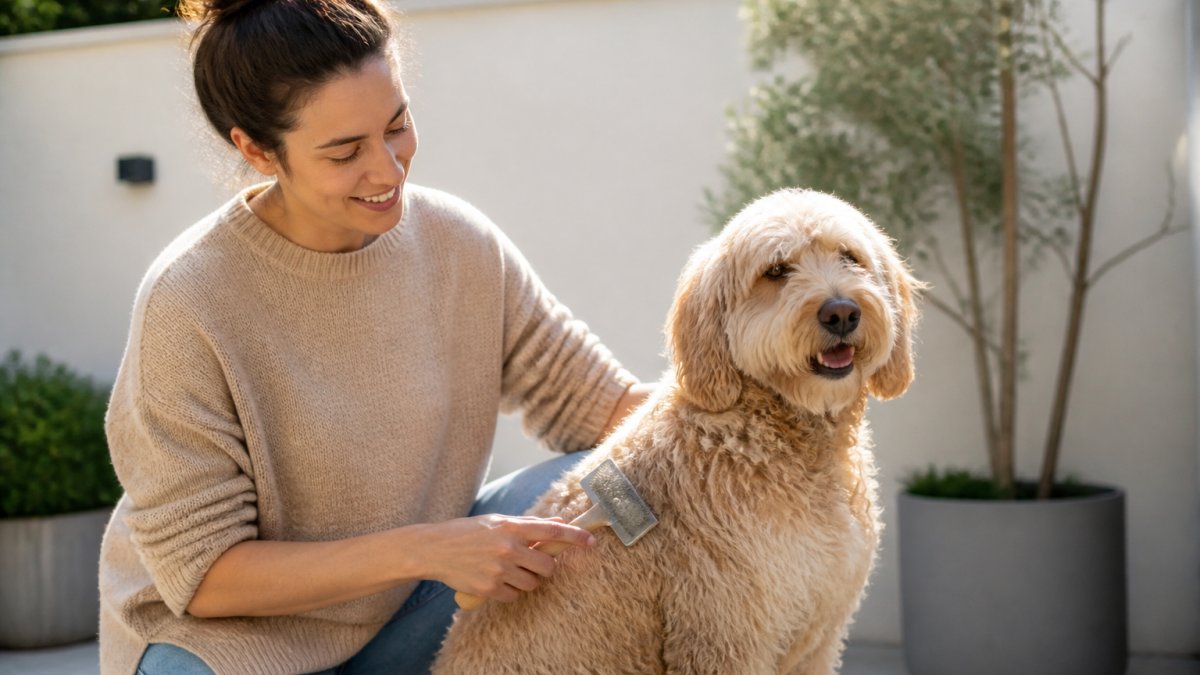
At Dexter And Billy Co, we help owners build realistic grooming routines that fit their lives. Our guides recognise that perfection isn't the goal, consistency is. Whether your dog has a short, smooth coat or a tangle-prone fleece coat, starting with a simple routine you can actually stick to makes all the difference.

How to brush a dog's coat correctly and consistently
Brushing technique matters as much as frequency. Many dog owners brush only the outer layer of their dog's coat, missing the undercoat and the areas where mats actually start, behind the ears, under the collar, around the harness line, and between the legs.
The correct approach depends on your dog's coat type. For short-haired dogs, a slicker brush or rubber grooming mitt works well. For longer or curly coats, you'll want a combination of tools: a slicker brush for the outer coat and a metal comb for checking underneath.
Here's the basic technique:
- Start at the head and work methodically towards the tail
- Brush in the direction the coat grows, not against it
- Use gentle, short strokes rather than long aggressive pulls
- Check behind the ears, under the armpits, and between the toes with your comb
- If you hit a tangle, stop and work it out gently, don't force the brush through
The most common mistake is brushing too hard or too quickly. Your dog's skin is sensitive, and aggressive brushing can cause irritation or make your dog anxious about grooming altogether. Slow, gentle strokes build trust and actually work better at removing loose fur.
Bathing your dog without preparing the coat first
Many owners jump straight into the bath without brushing first, which is a significant mistake. Bathing a matted or tangled coat actually tightens the knots and makes them harder to remove later. Water causes mats to compress and set, turning a manageable tangle into a problem that only a professional groomer can fix.
Before any bath, brush your dog thoroughly. Remove loose fur, work out tangles, and make sure the coat is as mat-free as possible. This takes 10-15 minutes but saves you hours of frustration afterwards.
When you do bathe your dog, use lukewarm water and a quality dog shampoo suited to their coat type. Avoid human shampoo, which can irritate their skin. For dogs with sensitive skin, consider a gentle, hypoallergenic formula like Pride + Groom THE SENSITIVE ONE, which contains soothing ingredients like hemp oil and oatmeal.

Lather gently and rinse thoroughly, soap residue left in the coat can cause itching and flaking. This is where many owners rush. Take your time with rinsing; it's not glamorous, but it matters.
How often to bathe a dog: finding the right rhythm
How frequently you bathe your dog depends on their coat type, skin condition, and lifestyle. A dog who spends most time indoors and has a short coat might only need a bath every 4-6 weeks. A dog with a curly or long coat, or one who gets muddy regularly, may need bathing every 2-4 weeks.
The mistake most owners make is bathing too frequently. Over-bathing strips natural oils from the coat and skin, leading to dryness, flaking, and irritation. Your dog's skin is naturally self-regulating, bathing once a month is usually enough for most dogs.
Signs your dog needs a bath sooner: visible dirt, an unpleasant smell, or itching and scratching. Signs you're bathing too often: dry, flaky skin, excessive scratching, or a dull coat.
After bathing, drying matters as much as the bath itself. Never leave your dog damp, especially if they have a curly or long coat. Damp hair leads to mats and can trap moisture against the skin. Use a towel to absorb excess water, then either air-dry in a warm room or use a dog-safe dryer on a low setting.
How to prevent mats in a dog's fur before they start
Preventing mats is infinitely easier than removing them. The strategy is simple: regular brushing, proper bathing technique, and knowing which areas are prone to matting.
High-risk zones for matting are almost always the same: behind the ears, under the collar or harness, around the armpits, under the tail, between the toes, and around the belly. These areas experience friction from movement and moisture from the environment, making them perfect breeding grounds for tangles.
Finally feel confident grooming your dog at home. →
Check these zones every few days, even if you're not doing a full brush. A quick 5-minute check with a metal comb can catch early tangles before they become problematic. If you find a small mat, work it out immediately with your fingers or a comb. The longer you wait, the tighter it becomes.
For dogs with curly or fleece coats, Cockapoos, Cavapoos, Poodles, and Doodles, matting is a genuine challenge. These coats are beautiful but require more attention. If you're struggling with consistent matting, consider the No More Mats: Curly Coat Care Reset guide from Dexter And Billy Co, which provides a structured 21-day plan specifically designed to break the mat cycle.
| High-Risk Area | Why It Mats | Prevention Strategy |
|---|---|---|
| Behind ears | Friction and moisture | Comb daily, keep dry after bathing |
| Under collar/harness | Constant rubbing | Remove collar when not needed, check daily |
| Armpits | Friction and heat | Brush gently, check twice weekly |
| Between toes | Moisture and dirt | Dry thoroughly after walks, comb weekly |
| Tail base | Friction and shedding | Brush gently, check every few days |
Dog nail trimming mistakes and how to trim safely
Nail care is often neglected because it feels intimidating, but overgrown nails cause real problems. Long nails change how your dog walks, putting pressure on the joints and potentially causing pain or mobility issues over time.
The most common mistake is trimming too short. You want to remove just the clear part of the nail, stopping before the pink quick (the blood vessel inside). Cutting into the quick is painful, causes bleeding, and makes your dog fearful of nail trims in the future.
If you're unsure about where to trim, stop. A professional groomer or vet can show you exactly where to cut, or you can let them handle it. There's no shame in saying this isn't your comfort zone, it's better than accidentally hurting your dog.
For dogs with anxiety around nail trims, introduce the process gradually. Let your puppy get used to having their paws handled before you ever bring out the clippers. Short, calm sessions build confidence. If your dog is genuinely fearful or snappy during nail care, professional help is the kindest option.
Knowing when to stop and ask for professional help
Here's what many dog owners struggle to admit: some grooming tasks are beyond at-home care, and that's completely normal.
Professional grooming isn't a failure. It's a practical choice that protects your dog's comfort and wellbeing. If your dog has severe matting, painful skin, wounds, ear infections, or extreme anxiety during grooming, a professional groomer or vet is the right call. Trying to push through at home often makes things worse.
Similarly, breeds with specific grooming needs, hand-stripping for terriers, precision cuts for poodles, really do need professional expertise. These aren't skills you pick up quickly, and poor technique can damage the coat or hurt your dog.
The goal of at-home grooming isn't to replace professionals entirely. It's to maintain your dog's coat between appointments, build a calm routine, and catch problems early. When you do need professional help, you'll be better equipped to communicate what your dog needs and what you've already done.
At Dexter And Billy Co, we're honest about this balance. Our guides help you manage grooming confidently at home, but they also teach you to recognise when professional support is the kindest choice. The Calm Dog Grooming & Coat Care Guide includes clear guidance on knowing when to stop brushing and when to ask a groomer for help.
Common dog grooming mistakes often come down to inconsistency, rushing, or not knowing your dog's specific coat needs. Regular brushing, proper technique, and knowing when to ask for professional help create a sustainable routine that keeps your dog comfortable and reduces stress for both of you.
If grooming feels overwhelming, start small. A 5-minute daily brush beats perfection. For dogs with curly or tangle-prone coats, structured guidance makes a real difference. Dexter And Billy Co's digital guides are designed to help you build a realistic routine that actually fits your life, no overwhelm, just calm, considered care that works.
Frequently Asked Questions
What are the most common dog grooming mistakes?
The most common mistakes include skipping regular brushing, bathing without preparing the coat, using the wrong tools, and trimming nails incorrectly. Many owners also bathe their dogs too frequently or don't recognise early signs of matting. These mistakes often happen because grooming routines aren't established early enough or owners feel overwhelmed by the process. Starting with a clear plan, like the guidance in The Calm Dog Grooming & Coat Care Guide, helps you avoid these pitfalls from the beginning.
How often should I bathe my dog, and what's the biggest bathing mistake?
How often you bathe your dog depends on their coat type and lifestyle, but most dogs benefit from bathing every 4-12 weeks. The biggest bathing mistake is not brushing thoroughly before the bath. When you bathe a matted or tangled coat, water tightens knots and makes them harder to remove. Always brush first, then bathe. For curly-coated dogs especially, this order is critical to prevent painful mats from forming.
Can brushing a dog's coat too much cause problems?
Brushing too frequently with the wrong technique can irritate the skin and damage the coat, but regular, gentle brushing is essential. The issue isn't how often you brush, it's how you brush. Using the wrong tools, brushing against the coat direction, or being too rough causes damage. Short, calm sessions with appropriate tools for your dog's coat type are far better than occasional aggressive brushing. Consistency matters more than intensity.
How can I prevent mats in my curly or long-haired dog's coat?
Mats start in hidden areas: behind the ears, under the collar, around harness lines, under the legs, and between the toes. Check these spots daily with a comb. Brush 2-3 times weekly using a slicker brush and comb together. Avoid bathing over knots, and dry your dog thoroughly after baths or wet walks. If your dog keeps matting despite regular care, the No More Mats guide provides a structured 21-day reset plan with specific brush-and-comb methods for dense coats.