

What Age Should You Groom Your Puppy?
Last Updated: 23 October 2026
Quick Summary
What age should you groom your puppy? Most puppies can begin basic grooming introduction between 10 and 12 weeks old, though timing depends on your puppy's readiness and vaccination status. Start with gentle handling and brushing at home, then progress to a professional groom around 14 to 16 weeks once vaccinations are complete.
- Begin with daily gentle touch and handling for 2-5 minutes before introducing any tools
- Introduce grooming tools gradually, one at a time, starting with a soft brush
- Most puppies are ready for their first professional groom at 14-16 weeks after completing vaccinations
- Brush your puppy 2-4 times per week depending on coat type once they reach 4 months
- Schedule professional grooming every 6-8 weeks once your puppy has had their first groom
Table of Contents
- When to Start: The Right Age for Your Puppy's First Groom
- How to Get a Puppy Used to Grooming: Building Positive Associations
- Puppy's First Groom: What to Expect and How to Prepare
- Creating a Puppy Grooming Schedule That Works
- Essential Puppy Grooming Tools and How to Use Them
- Common Mistakes to Avoid During Early Grooming
- Conclusion: Building Confidence Through Calm Routine
- Frequently Asked Questions
When to Start: The Right Age for Your Puppy's First Groom
What age should you groom your puppy? Most puppies can begin basic grooming introduction between 10 and 12 weeks old, though the exact timing depends on your individual puppy's readiness and vaccination status. This doesn't mean a full professional groom right away, it means starting to familiarise your puppy with being touched, handled, and gently brushed in a calm, pressure-free way at home.
Starting early matters because puppies who feel safe during grooming from the beginning tend to stay calmer about it throughout their lives. Early exposure builds confidence rather than fear. However, rushing into a full professional groom before your puppy is ready can backfire, creating anxiety that takes months to undo.
At Dexter And Billy Co, we help everyday dog owners build grooming routines that feel manageable and calm. Rather than treating grooming as a chore that happens once every few months, we encourage thinking of it as a series of small, positive experiences your puppy learns to expect and trust.
Vaccination Status and Timing
Your vet's guidance on vaccinations matters more than a specific age. Many groomers won't accept puppies until they've completed their core vaccinations and booster shots, typically around 14 to 16 weeks old.
Check with your chosen groomer before booking. Some facilities have stricter requirements than others. Your vet can confirm when your puppy is safe for group settings.
The key is not rushing. A puppy who's been handled gently at home for several weeks before their first professional groom will settle far more easily than one who's never experienced touch or brushes.
How to Get a Puppy Used to Grooming: Building Positive Associations
Getting a puppy comfortable with grooming happens through repeated, short, positive experiences, not through forcing the issue. Your goal in these early weeks is simple: make being touched, handled, and brushed feel like a normal, pleasant part of daily life.
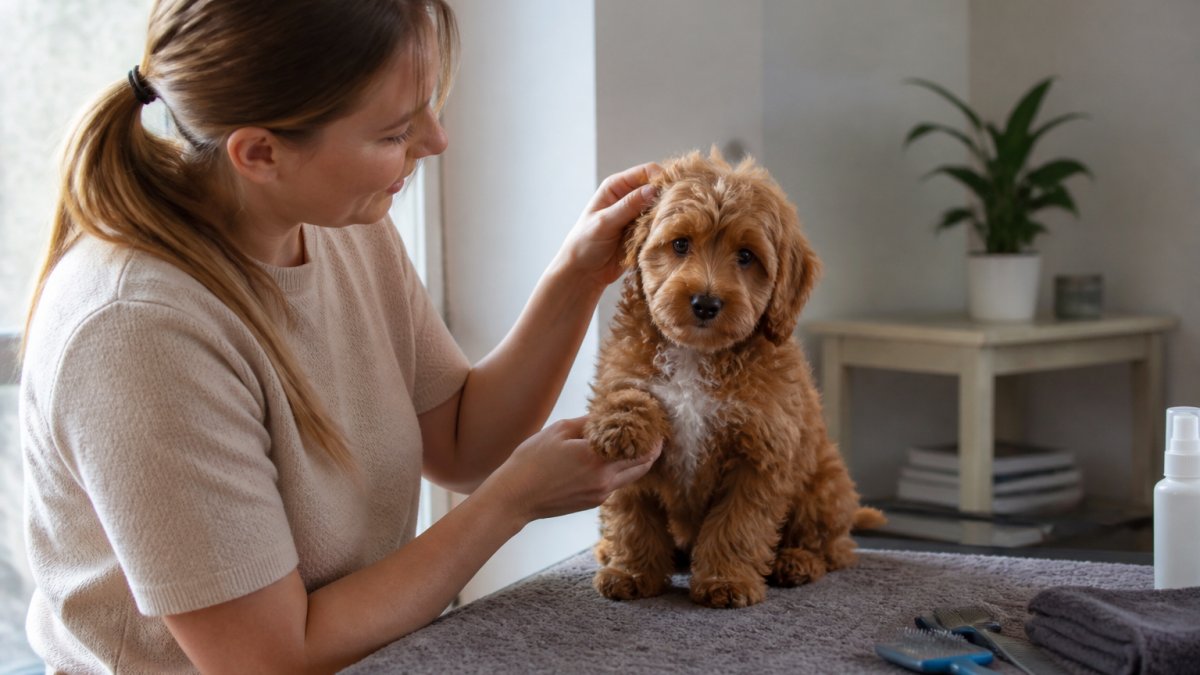
Starting with Touch and Handling
Begin with your hands, not tools. Spend a few minutes each day gently touching your puppy's paws, ears, face, and body. Make it casual and reward-based, a treat, praise, or play follows each handling session.
Touch each area for just a few seconds at first:
- Hold a paw for 2-3 seconds, release, reward
- Gently lift an ear flap, release, reward
- Softly touch the face and muzzle, release, reward
- Run your fingers along the body and legs, release, reward
Keep sessions under 5 minutes. A short, positive session beats a long one that frustrates your puppy. If your puppy pulls away or shows stress signals (tensing, avoiding, whining), stop immediately. Respect that boundary. You're building trust, not forcing compliance.
Many puppies naturally mouth or nibble during handling. This is normal exploring behaviour, not aggression. Redirect gently with a toy or treat rather than scolding.
Introducing Grooming Tools Gradually
Once your puppy is relaxed with your hands touching all areas of their body, introduce tools one at a time. Start with a soft brush or comb.
Show your puppy the brush without using it. Let them sniff and investigate. Then:
- Brush one small area (like the side of the body) for 3-5 strokes
- Stop and reward immediately
- Build up over days to longer brushing sessions
Use this same approach with each new tool:
- Soft brush first
- Slicker brush (if your puppy's coat type needs it)
- Metal comb
- Nail clippers (shown but not used yet)
- Toothbrush
Never force your puppy to sit still. If they wriggle away, let them. Forcing creates negative associations. Instead, make grooming so rewarding that your puppy wants to stay.
Puppy's First Groom: What to Expect and How to Prepare
Your puppy's first professional groom is a milestone, but it doesn't need to be stressful. Preparation at home makes an enormous difference in how your puppy handles the experience.
Preparing Your Puppy at Home
By the time your puppy visits a groomer, they should be comfortable with:
- Being touched all over their body
- Having their paws, ears, and face handled
- Experiencing a soft brush or comb
- Hearing the sound of running water (if possible)
Introduce water gradually. Let your puppy play near a running tap. Wet a small area of fur with a cup of lukewarm water during a relaxed moment. Keep it positive and brief. Many puppies find their first bath less scary if they've heard water sounds and felt small amounts of water beforehand.
Talk to your groomer before the appointment. Share what your puppy has experienced and what makes them nervous. A good groomer will work at your puppy's pace, taking breaks if needed.
What Happens During a Professional First Groom
A first professional groom for a puppy typically includes:
- A gentle bath in lukewarm water
- Drying with a towel (and sometimes a dryer on low heat)
- Brushing or combing to remove loose fur
- Basic nail trim
- Ear cleaning (if needed)
- A tidy-up of fur around the eyes and paws
The entire appointment usually lasts 45 minutes to an hour for a small puppy. Your groomer will handle your puppy calmly and take breaks if your puppy becomes stressed. It's not about perfection, it's about building positive experience.
After the groom, your puppy may feel tired or emotional. This is normal. Keep the rest of the day calm and quiet. Avoid rough play or additional handling.
Creating a Puppy Grooming Schedule That Works
A realistic grooming schedule prevents matting, keeps your puppy's coat healthy, and builds regular positive experiences. What works depends on your puppy's coat type and your available time.
Age-Based Grooming Routines
8-12 weeks (before first professional groom):
- Daily gentle touch and handling (2-5 minutes)
- Soft brushing 2-3 times per week (3-5 minutes)
- Introduction to grooming tools without using them yet
12-16 weeks (preparing for first professional groom):
The Gentle Puppy Grooming Confidence Guide →
- Daily handling continues
- Brushing 3-4 times per week (5-10 minutes)
- Introduction to water and bathing at home
- First professional groom when vaccinations are complete
4-6 months onwards:
- Brushing 2-4 times per week depending on coat type
- Professional groom every 6-8 weeks (or as recommended by your groomer)
- Regular nail checks and paw handling
- Ear checks and gentle cleaning as needed
Puppies with curly, wavy, or tangle-prone coats need more frequent brushing, often 3-4 times per week, to prevent matting. Smooth-coated puppies may need only weekly brushing.
| Age | Handling | Home Brushing | Professional Groom |
|---|---|---|---|
| 8-12 weeks | Daily, 2-5 min | 2-3 times/week | Not yet |
| 12-16 weeks | Daily, 5-10 min | 3-4 times/week | First groom (if ready) |
| 4+ months | Several times/week | 2-4 times/week | Every 6-8 weeks |
The exact schedule depends on your puppy's individual coat and temperament. Some puppies settle into grooming faster than others, and that's fine. Consistency matters far more than perfection.
Essential Puppy Grooming Tools and How to Use Them
You don't need many tools to start. A few basics, chosen for your puppy's coat type, are enough. The Dexter And Billy Co team has created resources that help you understand which tools suit your puppy's needs.
Brushes and Combs for Different Coat Types
Soft brush (slicker or paddle brush): Use on all coat types for gentle introduction. Start here before moving to other tools.
Metal comb: Useful for checking for tangles and working through fine mats. Use gently on puppies, they have sensitive skin.
Slicker brush (if your puppy has a longer or curlier coat): Removes loose undercoat and prevents matting. Use in the direction of hair growth, not against it.
Deshedding tool (for double-coated breeds): Only introduce this after your puppy is very comfortable with brushing.
For curly or wavy-coated puppies, a slicker brush and metal comb are your main tools.
Nail Care and Paw Handling
Nail care starts with handling, not clipping. Get your puppy comfortable with paw touches first. Hold each paw gently for a few seconds daily. Reward calm behaviour.
Once your puppy is relaxed with paw handling, introduce nail clippers by sight and sound. Let your puppy hear the click without using them. Many puppies find the sound startling, so familiarity helps.
Your puppy's nails need trimming every 3-4 weeks, depending on growth rate and activity level. If you're not confident clipping, your groomer or vet can do it. There's no shame in leaving this task to professionals, many dog owners do.
Between trims, check paws for:
- Overgrown nails
- Dirt or debris between pads
- Redness or irritation
- Cracks or cuts on pads
Paw handling also includes ear checks. Gently lift each ear flap and look inside. Puppies' ears should be pink inside, not red or smelly. If you notice discharge or odour, mention it to your vet.
Common Mistakes to Avoid During Early Grooming
Rushing into a full groom before your puppy is ready. A stressed first experience can create lasting anxiety.
Forcing your puppy to sit still. Puppies naturally wriggle and explore. Restraining them creates fear.
Skipping the handling phase. Many owners jump straight to brushes and tools. Your hands are the most important grooming tool.
Using the wrong tools for your puppy's coat. A fine-tooth comb on a curly-coated puppy causes frustration for both of you.
Ignoring stress signals. If your puppy is pulling away, whining, or tensing, stop.
Not communicating with your groomer. Before your puppy's first professional groom, tell your groomer about any anxieties, handling sensitivities, or previous experiences.
Conclusion: Building Confidence Through Calm Routine
Grooming your puppy doesn't have to feel overwhelming. Starting early with gentle handling, introducing tools gradually, and respecting your puppy's comfort level builds confidence that lasts a lifetime. A puppy who learns grooming is safe and predictable will stay calm about it as an adult dog.
If you're feeling uncertain about where to start, The Gentle Puppy Grooming Confidence Guide from Dexter And Billy Co walks you through each step, from first handling to preparing for a professional groom. It includes a printable checklist to keep you on track and reassurance that you're doing this right. For many owners, having a clear, calm plan removes the stress entirely.

Frequently Asked Questions
At what age should a puppy have their first professional groom?
Some groomers prefer waiting until 12-14 weeks once your puppy is up to date with booster or core vaccinations. Check with your chosen groomer about their specific requirements and your puppy's vaccination status before booking. Starting early helps your puppy feel comfortable with handling before grooming becomes stressful.
How do I get my puppy used to being brushed?
Begin with very short sessions of just a few minutes, focusing on gentle touch rather than thorough brushing. Let your puppy sniff and mouth the brush first. Start with soft strokes on less sensitive areas like the back and sides, then gradually introduce handling of paws, ears and face. Use treats and praise to create positive associations. Keep sessions calm and stop before your puppy becomes frustrated or overwhelmed.
Can you groom a puppy at 8 weeks old?
At 8 weeks, your puppy is too young for professional grooming services. Instead, focus on at-home handling and gentle brushing to build confidence. Start introducing your puppy to grooming tools, touch and basic handling routines at home. This early foundation makes the transition to professional grooming easier when your puppy is old enough, typically around 10-12 weeks depending on vaccination status.
What grooming tools do I need for a puppy?
Start with a soft puppy brush and nail clippers designed for puppies. For curly or tangle-prone coats, a slicker brush is useful. The Gentle Puppy Grooming Confidence Guide provides detailed guidance on selecting and using the right tools for your puppy's coat type and age.
