

How to Use a Dog Grooming Comb: Step-by-Step Guide
Last Updated: 23 October 2026
Quick Summary
To use a dog grooming comb, work in thin layers: part the coat to the skin, brush each layer with a slicker, then comb through to check for snags. Run the comb after every brushing session to find knots before they become mats.
- Choose medium teeth for most coats, fine teeth for silky hair and wider teeth for curly coats.
- Part the coat in rows and work one thin layer at a time from the skin outwards.
- Keep sessions short: ten minutes of focused line work beats half an hour of random brushing.
- Never comb a dry, matted coat straight from the root or bathe over a tight mat.
- Check behind the ears, under the collar, the harness line, armpits, tail base and between the toes.
Table of Contents
- Why a Dog Grooming Comb Does More Than a Brush
- What You'll Need Before You Start Combing
- Step 1: Choose the Right Dog Grooming Comb for Your Dog's Coat
- Step 2: The Line Brushing Technique for Dogs, Explained
- Step 3: How to Remove Dog Mats Without Cutting
- Step 4: Build a Dog Grooming Routine for Beginners
- Common Combing Mistakes and How to Spot Them
- Conclusion
- Frequently Asked Questions
Why a Dog Grooming Comb Does More Than a Brush
A dog grooming comb is a metal or plastic tool with a row of teeth that lifts loose hair, checks for tangles and reaches the skin, which a brush alone often misses. Learning how to use a dog grooming comb properly is one of the most useful skills an everyday owner can build. The pet grooming market is projected to grow from USD 19.5 billion in 2026 to USD 46.7 billion by 2036, according to Future Market Insights' global pet grooming forecast, and much of that growth is owners doing more at home.
Here is the part most people miss: a brush smooths the top of the coat, but a comb tells you the truth. If the comb snags, there is still a knot underneath. At Dexter And Billy Co, we build our guides around that one check, because it is the difference between a coat that looks tidy and a coat that actually is.
Grooming is not just cosmetic. research published on PMC describes grooming as a fundamental health maintenance activity for companion animals, with neglect potentially leading to serious welfare consequences. A comb is how you catch problems early.
What You'll Need Before You Start Combing
You need a metal comb, a slicker brush, a spray bottle of water or detangling spray, treats and a non-slip surface. For a clear overview of what tools dog groomers use, that beginner's guide covers the essentials. That is genuinely it. You do not need a cupboard full of tools to start.
Here is a simple starter kit:
- Metal comb with medium and fine teeth
- Slicker brush for loosening surface hair first
- Detangling spray for stubborn spots
- Small treats for calm rewards
- Non-slip mat or towel so your dog feels steady
Set up before you call your dog over. Fumbling for a comb while your dog waits is how sessions turn stressful.
Step 1: Choose the Right Dog Grooming Comb for Your Dog's Coat
The right dog grooming comb depends on coat type: medium teeth for most coats, fine teeth for silky hair and ears, and wider-spaced teeth for thick or curly coats. If you are unsure when to use a slicker brush versus a comb, that guide explains the difference. Choosing well makes the whole routine easier.
Comb Types by Coat Length and Texture
| Coat Type | Best Comb | What It Does |
|---|---|---|
| Short and smooth | Fine-toothed metal comb | Lifts loose hair, checks skin |
| Double coat | Medium-toothed comb | Reaches under the top coat |
| Long and silky | Fine comb plus slicker | Works through feathering gently |
| Curly or fleece | Wide-toothed comb | Finds knots under the fluff |
| Puppy coat | Soft slicker, then fine comb | Gentle first sessions |
Curly and fleece coats need the most care. A comb that is too fine will drag and pull. Wider teeth let you find the knot before you try to shift it.
Step 2: The Line Brushing Technique for Dogs, Explained
The line brushing technique for dogs means parting the coat in rows and brushing one thin layer at a time, from the skin outwards, then combing through to confirm the section is clear. It sounds fussy. It is actually the fastest way to find hidden knots.
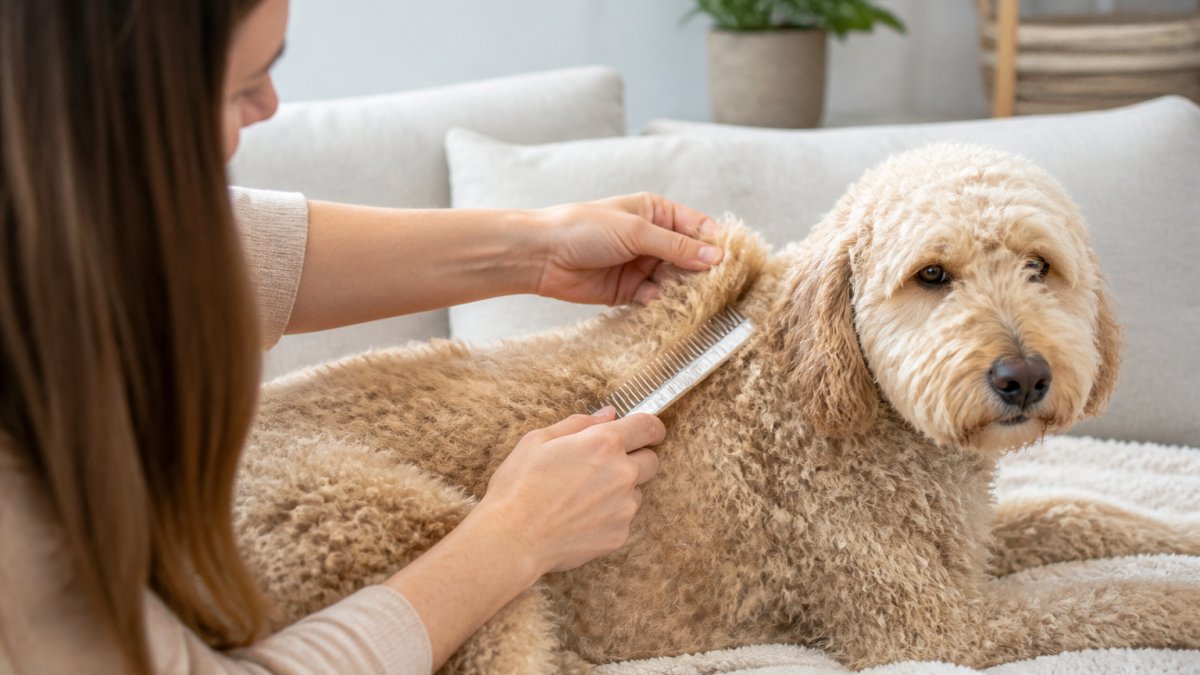
Here is how it works in practice:
- Part the coat down to the skin with your comb.
- Brush that thin layer with your slicker, away from the skin.
- Comb the same layer to check for snags.
- Move one row across and repeat.
- Work methodically, not randomly.
grooming guidance from Go Totally Mutts recommends parting the hair and brushing in layers, followed by a comb-through to confirm all tangles are removed. That comb-through is the step owners skip most often.
Keep sessions short. Ten minutes of focused line work beats half an hour of random brushing.
Step 3: How to Remove Dog Mats Without Cutting
To remove dog mats without cutting, work from the outer edge of the mat inwards with your fingers, then a wide-toothed comb, and stop if the mat is tight against the skin. Our guide on how to help severely matted dogs at home goes into more depth on safe removal. Never bathe or brush over a tight mat first. Water tightens knots, which makes them harder to shift.
Finally feel confident grooming your dog at home. →
A calm order of steps:
- Check the mat. Can you slide a comb under it? If not, stop.
- Loosen the edge gently with your fingers.
- Work inwards with a wide-toothed comb, a little at a time.
- Use detangling spray to give the hair some slip.
- Stop if the skin looks red or the mat is solid.
Step 4: Build a Dog Grooming Routine for Beginners
A dog grooming routine for beginners works best when it is short and repeatable: a two-minute comb check most days, a longer line-brushing session weekly, and a full coat review monthly. Consistency beats marathon sessions every time.
A realistic weekly rhythm:
- Daily: two-minute comb check on the trouble spots
- Weekly: full line-brush and comb-through
- Monthly: check paws, ears, tail base and harness lines
- Every 6-8 weeks: groomer appointment if you use one
The trouble spots matter most. Behind the ears, under the collar, the harness line, armpits, tail base and between the toes are where mats quietly start.
If you want a structured plan to follow rather than guesswork, our Calm Dog Grooming Coat Care Guide sets out a simple daily, weekly and monthly rhythm you can actually stick to.

Common Combing Mistakes and How to Spot Them
The most common combing mistakes are brushing only the top coat, skipping the comb check, working on a dry matted coat and rushing the session. It is worth checking your technique against these common dog grooming mistakes so you can correct them early. Each one leaves knots behind and makes the next session harder.
Watch for these signs:
- The comb snags in the same spot every time. There is a knot underneath.
- Your dog flinches when you reach a certain area. Slow down and check the skin.
- The coat looks smooth but feels lumpy. That is a mat forming.
- You are brushing the same patch repeatedly. You are smoothing, not clearing.
the ASPCA's dog grooming tips note that regular brushing or combing helps remove dirt, distribute natural oils and prevent coat problems. That is the whole point of the routine.
Conclusion
Combing your dog well is not about perfect technique. It is about a short, calm routine you repeat, and knowing when to stop and ask for help. If your dog has a curly, wavy or tangle-prone coat, the difference between a good week and a matted one often comes down to a two-minute comb check.
At Dexter And Billy Co, we make practical digital guides and printable workbooks for everyday owners, with clear steps for coat types, mat checks and calm sessions. Our Calm Dog Grooming Coat Care Guide gives you the foundation for a routine that fits real life.
Frequently Asked Questions
Should I use a comb or a brush on my dog?
Most owners need both, but they do different jobs. A brush loosens surface dirt and spreads natural oils, while a dog grooming comb checks the coat right down to the skin and lifts out tangles a brush glides over. Use the brush first to loosen the coat, then follow with a comb to confirm nothing is left behind. If the comb snags, there is still a tangle to work on. Regular brushing or combing helps remove dirt, distribute natural oils and prevent coat problems.
How often should I comb my dog's coat?
It depends on the coat. Short, smooth coats usually need a comb-through once or twice a week. Curly, fleece and tangle-prone coats need a proper comb-check every day or two, with a longer session weekly. Daily brush-throughs with a slicker brush and comb are often recommended for coat maintenance. A quick five-minute check of the high-risk areas, behind the ears, under the collar, armpits, tail base and paws, catches most problems early.
Can I use a human comb on my dog?
It is not a good idea. Human combs have teeth spaced for fine human hair, so they either slide over a dog's undercoat or snag painfully on it. Dog grooming combs are built with rounded pins and spacing matched to coat types, which matters most on double coats and curly coats. A cheap human comb can also have sharp moulded seams that scratch the skin. Use a comb designed for dogs, and match the tooth spacing to your dog's coat length.
How do I know if I'm combing my dog's coat correctly?
The comb tells you. Work in sections and glide the comb through each one; if it passes through smoothly from skin to tip, that section is done. If it catches, go back to that spot with your slicker brush and comb again. Always finish with a full comb-through, because a brush can skim over knots that a comb will find. Keep sessions short and calm, and stop if your dog shows discomfort rather than pushing through.
If combing still feels like a battle, you are not alone, and it does not have to stay that way. Our guides break grooming into small, gentle steps you can build on, with coat-type guidance, a simple five-minute coat check and support for nervous dogs. Get started with Dexter And Billy Co and build a calm grooming routine you can keep up with.
